Buy in installments with TorobPay
4 installments, no fees
No guarantor, no check
A pendant light is an essential element in interior architectural lighting that not only provides focused illumination but also defines spatial character and ambiance. When purchasing a pendant light, factors such as interior style, room scale, ceiling height, beam distribution, and chassis materials must be carefully evaluated to achieve optimal harmony.
Sazeh Light offers a curated collection of modern, decorative, and custom-engineered pendant lights designed for kitchen islands, dining tables, living areas, cafes, restaurants, and executive workspaces. Our diverse catalog, custom finish options, and tailored fabrication capabilities ensure a seamless match with your interior architectural aesthetic.
| Specification | Standard Specification | Practical Buying Considerations |
|---|---|---|
| Installation Height | Typically 70 to 90 cm above countertops or tables | In high-ceiling spaces, suspension can be adjusted higher to ensure wider and more balanced light distribution. |
| Chassis Material | Engineered metal, timber, glass, acrylic, or hybrid composites | Material choice should directly complement the interior theme (Modern, Classical, or Minimalist). |
| Correlated Color Temperature (CCT) | Cool Daylight, Warm White, Natural White | Daylight is suited for task-driven spaces; warm white creates an inviting, cozy atmosphere. |
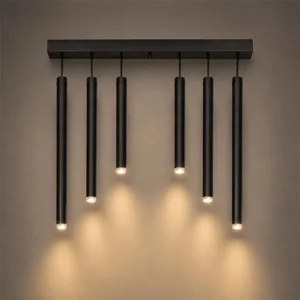
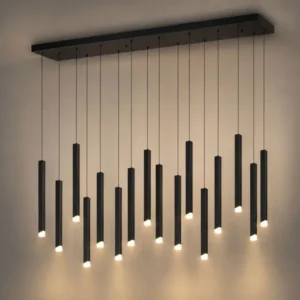
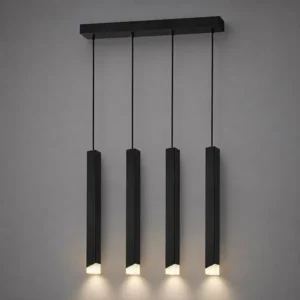
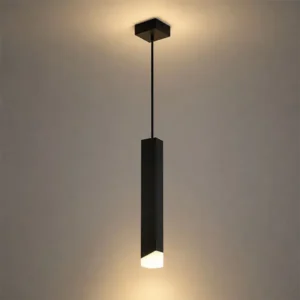
| Light Sources / Sockets | Ranges from single-point to multi-light linear arrays (1 to 6+ modules) | For expansive dining tables and large conference rooms, multi-light linear fixtures provide superior coverage. |
| Application Area | Dining rooms, kitchen islands, cafes, lobbies, or boutique retail | Fixtures with concentrated downward beam angles excel in accentuating task surfaces and intimate dining zones. |
| Cables and Electrical Rigging | High-durability insulated wiring and certified load-bearing cables | Always verify electrical safety certifications, thermal resistance, and structural wire load ratings. |
| Scale and Weight | Diameters typically range from 20 to 60 cm depending on profile | Chassis weight is critical when mounting directly into drywall, gypsum partitions, or false ceilings. |
| Height Adjustability | Integrated adjustable suspension systems | Adjustable drop mechanisms are vital for fine-tuning sightlines over kitchen islands and conference tables. |
| Energy Efficiency Rating | Class A / A+ for integrated solid-state LED fixtures | High-efficacy LED modules drastically reduce electricity draw and operational thermal output. |
| Ingress Protection (IP Rating) | IP44 or higher for damp or semi-open environments | Always specify sealed, moisture-resistant fixtures for covered terraces or open-air reception verandas. |
A major advantage of pendant fixtures is their architectural diversity. Manufactured across varying materials, silhouettes, and finishes, they offer dedicated solutions for every interior discipline.
For advocates of understated simplicity, minimalist pendants emphasize clean lines, neutral color schemes, and authentic materials such as timber, stone, and matte metals. Beyond providing functional light, they cultivate a serene, organized spatial ambiance.
Engineered for traditional or transitional interiors, classical pendants draw inspiration from heritage detailing. They incorporate ornate carvings, etched art glass, and noble metals like brass and bronze, finished in warm patinas and geometric silhouettes like conical or tiered forms.
Characterized by heavy-duty metals, raw textured surfaces, and bold utilitarian palettes. These luminaires deliver wide optical distributions suitable for open-plan footprints like warehouses, converted loft offices, and industrial-themed cafes, featuring durable solid-state LEDs that minimize maintenance while maximizing lifespan.
Tailored for innovative, design-conscious settings, modern pendants focus on striking geometry, dynamic profiles, and refined details. Utilizing industrial metals, acrylic diffusers, and optical glass, they introduce bold, vibrant contrast that elevates spatial energy.
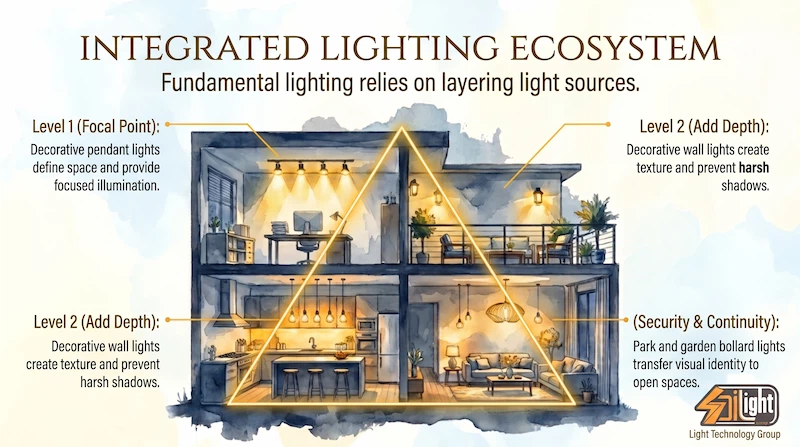
In interior architectural lighting, pendant fixtures often serve as the decorative anchor above kitchen islands, dining tables, and reception counters. However, achieving balanced illumination requires integrating them with complementary layers. For instance, pairing pendants with decorative ceiling lights supplies general ambient light and prevents harsh visual shadows.
For exterior building perimeters and main entrances, specifying durable outdoor park and pathway lights ensures structural weather resistance while unifying interior and exterior aesthetics.
Furthermore, reinforcing vertical perimeter walls with decorative wall lights complements hanging pendants, introducing visual depth and cozy ambiance.
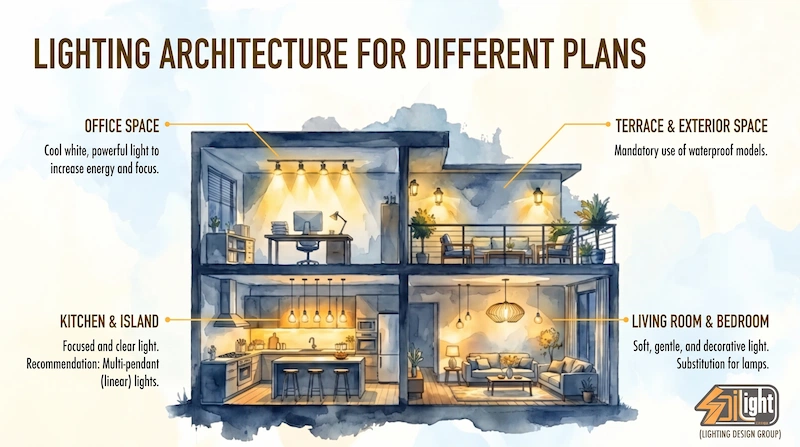
Selecting the appropriate pendant fixture requires evaluating architectural scale, optical output, and functional requirements:
Ensure the luminaire profile harmonizes with overall interior themes (contemporary, industrial, or classical). Review product styling categories to identify matching design languages.
Spacious rooms with high ceilings accommodate multi-tiered or long-drop pendant fixtures gracefully. For low-clearance spaces, specify compact profiles mounted closer to the ceiling to avoid visual clutter.
Optical distribution must match the space. Kitchen islands require focused, glare-free task light, while living rooms and bedrooms benefit from diffuse accent lighting. Multi-light linear arrays are ideal above long dining tables, whereas high-output neutral white illumination enhances focus in corporate suites.
Luminaire scale must align with underlying surfaces. As a standard architectural design rule, the diameter of a pendant fixture should measure approximately one-third the width of the table beneath it.
Coated metals lend an upscale, modern feel, while timber or natural textures impart warmth. Fixtures must feature industrial-grade finishes like electrostatic powder coatings to ensure scratch resistance and simple cleaning.
Modern pendants utilize high-efficiency LEDs that combine low operating costs with long lifecycles. Selecting the right color temperature directly governs the emotional resonance of the room.
| Design Style | Visual Characteristics | Recommended Applications |
|---|---|---|
| Modern | Clean geometric contours, neutral tones, minimalist profile | Kitchen islands, corporate suites, contemporary homes |
| Classical | Ornate curves, decorative metal details, warm patinas | Formal dining halls, grand foyers, luxury suites |
| Industrial | Heavy metal chassis, exposed fasteners, dark textures | Artisan cafes, creative studios, modern lofts |
| Minimalist | Disciplined geometry, zero extraneous trim, discrete scale | Bedrooms, reading nooks, executive desks |
| Bohemian | Textured organic weaves, handcrafted artisan elements | Covered verandas, boutique hospitality, creative lounges |
| Luxury | Polished metals, optical crystal, radiant light diffusion | High-end restaurants, hotel grand lobbies, VIP lounges |
Decorative pendant fixtures function as primary focal points within interior compositions. In residential living and reception rooms, a thoughtfully designed pendant anchors visual interest while establishing a welcoming atmosphere.
Above kitchen islands and dining tables, pendant lighting delivers targeted illumination that visually demarcates functional zones—a crucial benefit within open-concept layouts. In bedrooms, hanging bedside pendants replace conventional nightstand lamps, saving tabletop space and creating a tranquil ambiance.
In commercial environments like cafes, upscale restaurants, and boutique retail, pendant luminaires define brand character. Sazeh Light fixtures ensure that aesthetic design, ceiling scale, and photometric performance align seamlessly.
When evaluating decorative pendant lights, technical integrity is as critical as aesthetic design. Structural metals, suspension hardware, driver longevity, photometric efficiency, and warranty support directly dictate overall product value.
Sazeh Light manufactures a diverse portfolio of modern architectural pendants that harmonize with diverse interior styles, supported by complete warranties and engineering consultation prior to ordering.
Sazeh Light provides full bespoke manufacturing capabilities, allowing clients to tailor pendant lighting to their project parameters. Customize suspension lengths, chassis materials, electrostatic powder finishes, geometric footprints, socket configurations, and color temperatures. This flexibility supports architects, hospitality designers, and contractors outfitting upscale restaurants, modern residences, or executive corporate boardrooms.
Combining design innovation with premium raw materials, Sazeh Light delivers bespoke fixtures engineered for photometric performance and lasting durability.
[sc_fs_multi_faq headline-0=”h3″ question-0=”What is the structural difference between a decorative pendant light and a chandelier?” answer-0=”Pendant lights feature streamlined silhouettes, lower physical profiles, and direct suspension, making them ideal for modern and minimalist spaces. Chandeliers incorporate more elaborate multi-arm designs suited for expansive, classical settings.” image-0=”” headline-1=”h3″ question-1=”What is the recommended installation height for a dining table pendant light?” answer-1=”A suspension height of 70 to 90 cm above the tabletop surface is standard. This clearance ensures focused task illumination without obstructing sightlines across the table.” image-1=”” headline-2=”h3″ question-2=”Which correlated color temperature (CCT) is best for decorative pendants?” answer-2=”Warm white (2700K–3200K) is optimal for dining and residential living areas to foster warmth and relaxation. Neutral white (4000K) is preferred in corporate conference rooms and prep kitchens.” image-2=”” headline-3=”h3″ question-3=”Can decorative pendant fixtures be installed in outdoor or semi-open spaces?” answer-3=”Yes, provided the fixture carries an Ingress Protection rating of IP44 or higher to withstand atmospheric moisture and humidity in covered patios, verandas, or building entryways.” image-3=”” headline-4=”h3″ question-4=”What are the most critical factors to verify when purchasing a pendant light?” answer-4=”Key considerations include chassis metallurgy, optical efficacy, suspension cable load rating, height adjustability, power efficiency, and stylistic harmony with surrounding interior finishes.” image-4=”” count=”5″ html=”true” css_class=””]