Buy in installments with TorobPay
4 installments, no fees
No guarantor, no check
Lighting stands as one of the primary pillars of interior design. It serves not only to provide functional illumination across living spaces, but also demarcates interior zones, enhances natural spatial balance, and positively impacts human well-being. Selecting appropriate luminaires introduces a balanced and inviting atmosphere. Among lighting fixtures, the ceiling light commands a central role, serving as the primary ambient light source. From kitchens and bedrooms to circulation corridors and reception lounges, ceiling luminaires maintain a strong presence—providing functional illumination while functioning as a refined decorative element. Today, an extensive selection of modern ceiling lights, luxury flush mounts, and architectural LED fixtures caters to diverse design tastes, technical requirements, and budgets. The right fixture transforms the spatial atmosphere, whereas poor selection can lead to dimness, eye strain, or visual clutter.
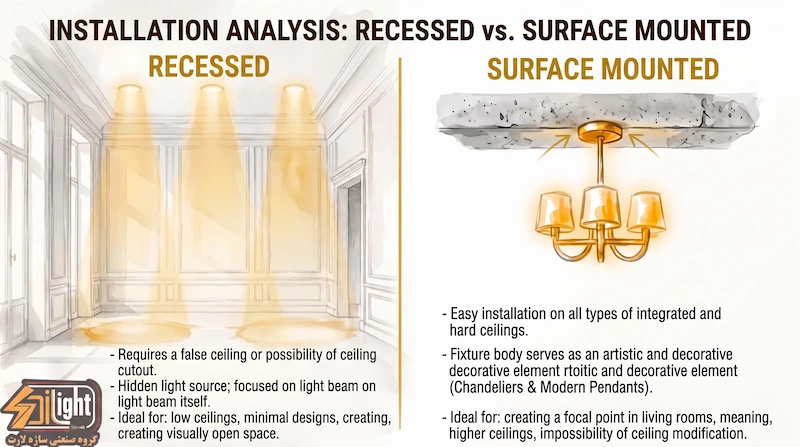
Contemporary decorative ceiling fixtures are manufactured across distinct categories, each engineered for specific architectural applications. Understanding these configurations ensures optimal product selection tailored to project specifications.
Recessed luminaires install directly into the ceiling plane, sitting flush with the surface for an integrated, seamless finish. Their minimalist form factor makes them widely adopted in modern spaces. Commonly manufactured in circular, square, and rectangular geometries, they are offered across warm white, natural white, and cool daylight correlated color temperatures. Delivering uniform, shadow-free illumination, recessed lights excel in dropped or false ceiling installations across offices, kitchens, and corridors.
In settings where ceiling cavities are absent or cutting into structural slabs is impractical, surface-mounted luminaires provide an ideal alternative. Beyond ample illumination, they introduce architectural presence. Surface-mounted designs offer extensive aesthetic diversity compared to recessed types, allowing designers to harmonize fixtures with interior styling. While traditional chandeliers historically dominated reception halls, contemporary luxury surface mounts and streamlined hanging fixtures now provide refined alternatives suited to diverse architectural styles.
Integrated with modern control technologies, smart luminaires provide wireless dimming, color tuning, scheduling, and remote automation. Smart ceiling lights are well-suited for users prioritizing control flexibility, energy efficiency, and modern convenience.
Solid-state LED technology has redefined architectural lighting. These fixtures ensure low energy consumption, minimal thermal output, and prolonged operating lifecycles. Available in both recessed and surface-mounted formats, LED ceiling lights integrate across residential and commercial environments. Additional operational benefits include flicker-free light delivery and consistent optical diffusion.
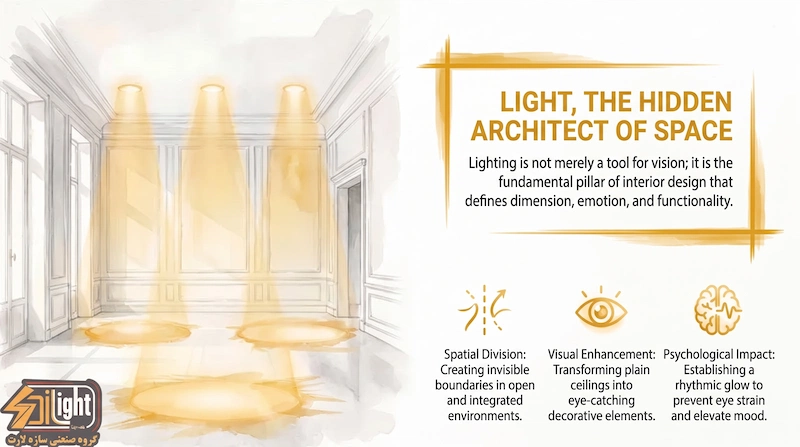
Selecting modern, luxury ceiling lights requires evaluating spatial dimensions, operational needs, and architectural intent. Core evaluation criteria include:
Room Dimensions: Expansive rooms require luminaires with higher lumen packages and broad optical distribution. In spacious living rooms, combining multiple modern ceiling luminaires or sculptural cluster mounts balances aesthetic appeal with balanced illumination. Conversely, compact rooms such as powder rooms or private bedrooms benefit from lower-profile fixtures delivering soft ambient output.
Interior Design Style: Ceiling fixtures must complement surrounding architectural elements. Traditional spaces benefit from ornate metallic or crystal detailing, while contemporary interiors favor clean lines, rectilinear geometry, and glare-controlled optics.
Correlated Color Temperature (CCT): Warm white light creates an inviting, relaxing atmosphere tailored for bedrooms and lounges. Neutral or cool daylight output is preferred in task-oriented zones such as kitchens and commercial offices requiring visual concentration.
Energy Efficiency: Solid-state LED ceiling luminaires feature minimal energy consumption and prolonged lifecycles, offering economical operation over extended lifespans with lower maintenance requirements compared to legacy incandescent sources.
Decorative ceiling lights serve as central architectural accents, delivering functional illumination while elevating spatial aesthetics. These fixtures can distribute light homogeneously or provide concentrated task illumination to highlight focal points. Selecting the appropriate fixture enhances reception halls, living areas, kitchens, or executive workspaces, visually expanding room proportions.
A primary application lies in unifying interior design schemes. Minimalist, modern, and transitional spaces require distinct luminaire geometries to achieve visual harmony. Furthermore, decorative ceiling luminaires act as the primary layer within multi-tiered lighting schemes, pairing with wall sconces and floor lamps to establish a welcoming ambiance.
In commercial hospitality spaces including restaurants, boutique hotels, and executive offices, decorative ceiling lights fulfill lighting requirements while delivering a professional, curated experience for guests and occupants.
Ultimately, selecting the ideal modern decorative ceiling light involves balancing project budget, room scale, and lighting objectives. Careful consideration of scale, form factor, metallurgy, and finish ensures optimal aesthetic and photometric performance.
When developing interior lighting schemes, balancing visual appeal and functional utility is essential. In addition to ceiling fixtures, integrating decorative wall lights for homes and workspaces supplements ambient illumination while introducing depth.
For exterior landscape projects, durable outdoor park and garden lights provide illumination that enhances pathway safety and architectural facades.
In damp locations or areas exposed to precipitation, specifying weatherproof outdoor lighting fixtures ensures IP-rated protection, structural durability, and electrical compliance.
Complementing ceiling luminaires with modern decorative pendant lights provides focused task illumination and visual interest over dining tables and kitchen islands.
| Selection Criteria | Practical Application |
|---|---|
| Fixture Category | LED, Surface-Mounted, Recessed, Suspended, Track Mount – each engineered for distinct spatial configurations. |
| Luminous Output (Lumens) | Illumination levels must match room square footage; lower levels for bedrooms, higher output for living rooms and offices. |
| Color Temperature (CCT) | Cool Daylight (4000K–6500K) for focused work environments; Warm White (2700K–3200K) for inviting living areas. |
| Energy Consumption | High-efficacy solid-state LEDs provide optimal energy savings and prolonged operational lifespans. |
| Form Factor & Styling | Coordinate luminaire profiles with interior design themes (Modern, Minimalist, Transitional, Industrial). |
| Dimensions & Mounting Height | Low ceilings require flush or recessed luminaires; high ceilings accommodate architectural pendants. |
| Pricing & Quality | Pricing varies with materials, driver grade, and smart controls; prioritize build durability and component longevity. |
| Primary Application | Residential (bedrooms, living spaces), Commercial (executive offices, retail), or Public (corridors, reception foyers). |
The ceiling lighting market spans diverse options, with pricing driven by technical and manufacturing factors:
Manufacturer Heritage: Established lighting manufacturers adhere to higher production standards and provide dedicated technical warranties, influencing fixture value.
Material Construction: Luminaires engineered from structural metals and treated with high-grade electrostatic powder finishes reflect premium durability.
Design Complexity: Luxury fixtures with custom profiles or labor-intensive assembly carry higher manufacturing costs while providing distinct architectural character.
Technical Components: Driver specifications, LED efficacy, dimming protocols, and smart integrations dictate pricing. Certified electronic components that isolate heat and prevent flicker ensure sustained performance and extended fixture lifespans.
Evaluating spatial requirements and sourcing through reputable lighting manufacturers ensures long-term reliability. Beyond upfront costs, factor in warranty coverage, parts support, and architectural cohesion with interior finishes.
A decorative ceiling light serves not merely as a light source, but as a central design element defining interior identity. Proper selection optimizes aesthetics, visual comfort, and long-term utility.
| Maintenance Protocol | Practical Recommendation |
|---|---|
| Routine Cleaning | Accumulated dust lowers optical output; wipe diffusers periodically with a soft, lint-free microfiber cloth. |
| Mains Power Stability | Voltage surges can damage electronic drivers; ensure electrical circuits utilize standard surge protection. |
| Moisture Isolation | In damp or humid zones (bathrooms, prep kitchens), install IP-rated moisture-resistant luminaires. |
| Component Servicing | Address damaged drivers or faulty modules promptly to prevent stress on adjacent electrical components. |
| Professional Installation | Installation by certified electricians ensures structural anchoring and secure electrical termination. |
| Operating Cycles | Avoid unnecessary 24/7 continuous operation to preserve thermal stability and maximize LED chip lifespan. |

Sazeh Light ceiling luminaires offer extensive customization, providing tailored solutions for projects requiring alignment between illumination, metallurgy, and interior decor. Clients can specify dimensional footprints, chassis finishes, lumen packages, color temperatures, mounting configurations (recessed, surface, or suspended), and physical styling. This flexibility supports architects, lighting designers, and corporate clients outfitting art galleries, modern corporate offices, and luxury retail boutiques requiring custom lighting solutions.
Utilizing industrial-grade metals, precision fabrication, and professional lighting engineering, Sazeh Light ensures custom fixtures deliver visual refinement alongside high luminous efficacy, thermal stability, and technical reliability.
[sc_fs_multi_faq headline-0=”h3″ question-0=”How do I calculate the proper ceiling light size for my space?” answer-0=”Fixture scale must correspond with room square footage. For compact spaces (10–15 m²), smaller to medium fixtures deliver balanced light. In expansive living rooms or open plans, utilizing larger fixtures or multiple coordinated luminaires ensures uniform illumination without dark zones.” image-0=”” headline-1=”h3″ question-1=”What are the advantages of integrated LED ceiling lights over traditional lamp sockets?” answer-1=”Integrated solid-state LED fixtures provide lower power consumption, extended operational life, and eliminate regular bulb replacements. Fixtures with replaceable lamps offer lamp-swapping flexibility but deliver lower optical integration and higher lifecycle maintenance.” image-1=”” headline-2=”h3″ question-2=”Are ceiling lights suitable for high-humidity areas like bathrooms or kitchens?” answer-2=”Yes, provided the fixture carries an appropriate Ingress Protection (IP) rating. For spaces exposed to humidity, condensation, or water vapor, specify luminaires rated IP44 or higher to protect internal electronics against corrosion and short circuits.” image-2=”” headline-3=”h3″ question-3=”What is the functional difference between round and square ceiling lights?” answer-3=”Photometrically, both deliver balanced illumination. The primary difference is aesthetic: circular fixtures offer a timeless, organic appearance that softens architectural lines, while square or rectilinear profiles deliver structured, modern geometry suited to contemporary designs.” image-3=”” headline-4=”h3″ question-4=”What is the difference between recessed and surface-mounted ceiling lights?” answer-4=”Recessed lights install within the ceiling cavity flush with the plane for a minimalist look, requiring a dropped or drywall ceiling. Surface-mounted lights install directly onto structural slabs where recessed cavities are absent, offering straightforward mounting and broader sculptural body styles.” image-4=”” headline-5=”h3″ question-5=”Is bulk ordering available for architectural and commercial construction projects?” answer-5=”Yes, Sazeh Light accommodates bulk commercial orders for residential developments, commercial renovations, and architectural projects, providing project-based pricing and specialized technical support.” image-5=”” count=”6″ html=”true” css_class=””]